

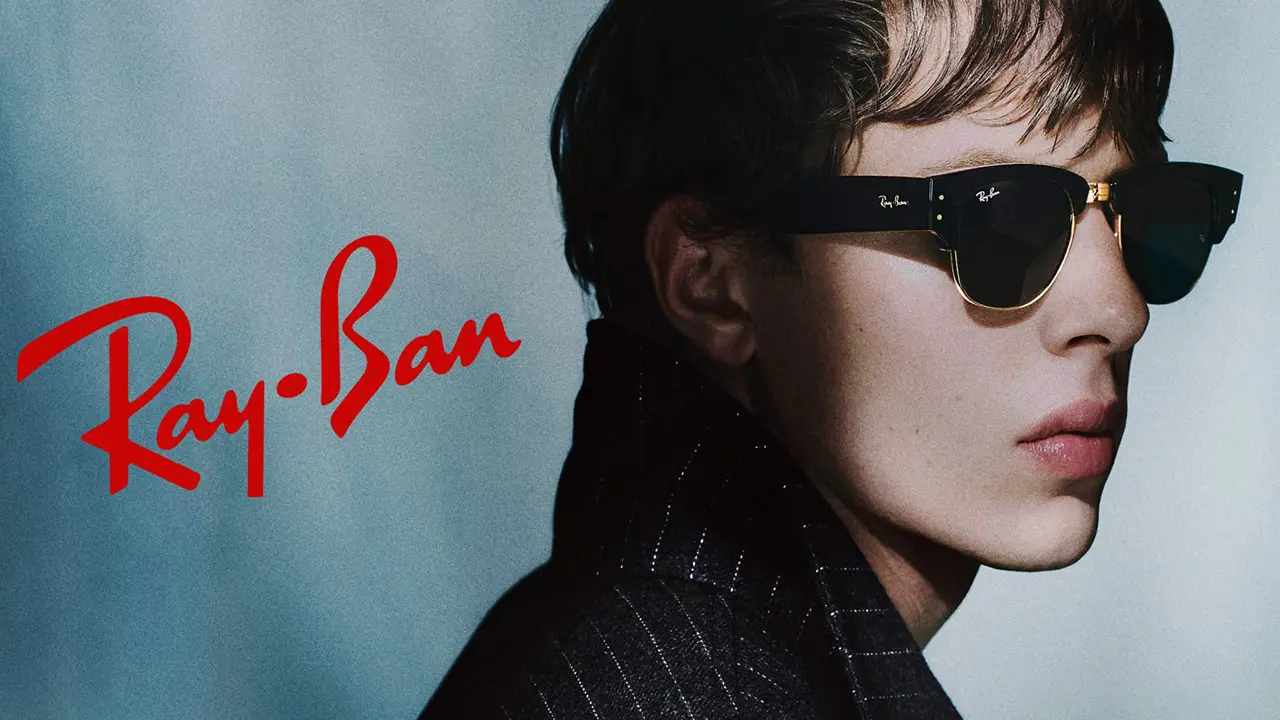
When the middle class buys a brand, the rich usually abandon it
When the middle class buys a brand, the rich usually abandon it.
So why didn’t that happen to Ray-Ban?
Think about it.
You’ll see celebrities wearing it.
You’ll also see a middle-class consumer proudly owning one.
No awkwardness.
No dilution.
And what makes it even more interesting – many people, including celebrities, don’t wear Ray-Ban because they are paid to… but because it genuinely fits into their identity.
Same with Levi Strauss & Co.
Across income groups.
Across generations.
Still relevant.
Still desirable.
And here’s the interesting part:
In most categories, the moment something becomes mass, it loses its appeal for the elite.
Because #status thrives on #exclusivity.
This is well explained by ideas like the “Snob Effect” – where value drops as accessibility rises.
But Ray-Ban and Levi’s break that rule.
They operate in a rare space often called “masstige” (mass + prestige) – a concept popularized by Michael Silverstein.
Masstige is the art of being aspirational at scale.
“Prestige at scale. Without dilution”.
So how do brands actually achieve this?
It’s not accidental. There are a few very deliberate moves behind it:
1. THEY BUILD ICONS NOT INVENTORY
Ray-Ban has Aviators and Wayfarers.
Levi’s has the 501.
They don’t flood the market with endless variations.
They double down on timeless icons.
Because icons don’t feel “mass”.
They feel classic.
2. THEY PRICE FOR ASPIRATION, NOT EXCLUSION
They’re not cheap.
But they’re not out of reach either.
This creates a sweet spot:
Affordable enough to aspire to
Premium enough to not feel commoditized
3. THEY ANCHOR IN CULTURE NOT STATUS
Ray-Ban = #effortless #cool.
Levi’s = #authenticity.
They don’t signal wealth.
They signal identity.
And identity cuts across income groups.
4. THEY STAY DISCIPLINED
No over-design.
No chasing trends.
Just a consistent, timeless aesthetic.
So the product never feels:
Too loud
Too dated
Too try-hard
5. THEY SELL THE SAME STORY TO EVERYONE
Many brands create:
A “premium line”
A “mass line”
And end up diluting both.
But these brands largely keep one core story.
So whether you’re rich or middle class, you’re buying into the same narrative.
Here’s the real insight:
Exclusivity is one way to build a premium brand.
But universality, done right, is far more powerful.
Because when a brand becomes:
Aspirational for some
Effortless for others
…it stops being a product.
It becomes culture.
Most brands choose:
Mass or Premium.
Very few manage both.
To be desired by many…without being dismissed by a few -that’s the real #brand game.
And that’s why brands like Ray-Ban and Levi Strauss & Co. stand out.
Not just because they scaled. But because they scaled without losing their soul.